



Due Justice was directed and written by Javier Reyna and stars Kellan Lutz, Efren Ramirez, Manu Intiraymi, and Jeff Fahey. It’s about a father with a military past hunting down the gang responsible for killing his wife and taking his daughter.
The Plot: Sometimes I’m unsure as to whether or not dissecting plots in movies like this is a necessary process, since some vigilante action scripts make no discernable effort to do anything different. Reyna doesn’t do anything to give his feature a narrative boost.
While mob boss Ellis (Fahey) is meeting with potential additions to his crew of enforcers, Max (Lutz) has the unfortunate timing of being in the same restaurant, trying to talk to Jerry (Intiraymi), his brother who happens to be the one getting appraised. Sensing a connection, the unsuspecting real estate lawyer gets some unwanted attention from Ellis’s people who are soon knocking on Max’s door. It’s obvious what happens next – Max’s wife and brother are killed, his daughter abducted, and his path eventually rerouted towards revenge.
Naturally, a cop subplot enters Due Justice, although detective Santiago (Ramirez) has had more screentime than Max up to this point, which is an odd choice. There’s also a quick and easy method to give Max a load of equipment and information, which keeps the writing from having to put any real work into legitimizing itself. Equally detrimental to the plot is its structure, which puts big emotional moments right after ostensible twists, making for an oblong viewing experience. The only thing that Due Justice has left is the reveal that some money was somehow lost at some undefined point, putting Ellis in a spot of bother that obviously will come into play when Max turns into a killing machine.
Jumbled is a good way to describe the narrative, with missing pieces never accounted for; the revenge elements shakily function, so at least the movie hits its main marks.
The Characters: Reyna tries for a sprawling network of steely personalities by introducing as many side characters as he can, but all this does is spread developments too thin amongst a cast of flat actors.
Max isn’t much of a leading man, with Due Justice devoting less than five minutes to establish his life. He’s a real estate lawyer who’s at work too much and plagued with migraines when put under too much stress, however, the status quo isn’t shown, allowing the movie to lurch into ex-military cliches before the audience has a compelling lead to latch onto. Lutz isn’t a huge help either, with the actor better served in supporting roles being forced to carry a movie when he really shouldn’t be doing so.
Santiago has an inordinate amount of time spent on his life. It would be an interesting change of pace to see the kind of character normally relegated to the background turned into a real human, but Reyna sticks with cop cliches, wasting the time that could’ve gone to Max. Santiago has his own kids, an estranged wife, and a dissatisfied captain. His sympathy lies with the victim, which again is normally the case in these movies. The only thing missing is the officer turning in his badge.
Ellis is the most interesting character here, but that’s largely because Fahey gives more effort than the part deserves. The mob boss takes nothing from nobody, quickly doling out punishment to his goons when they talk back, creating a believable power dynamic that justifies Max’s ability to fight a disjointed syndicate. There’s little else to Ellis apart from his gridlocked state within the ranks, or the rest of the ensemble, despite Reyna’s attempts to make it appear otherwise, but at least there’s Fahey.
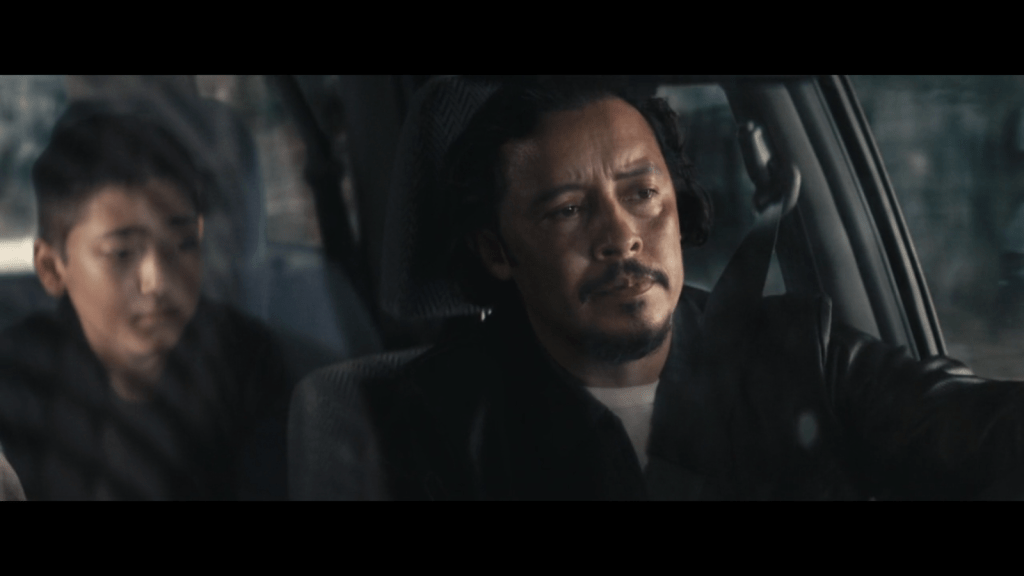
The Crime: Because of the helmer’s insistence on making Due Justice into a large scale study of criminal behavior, there are lots of examples of law-breaking, but very few of them are adequately handled.
Max’s quest is all but forgotten about after the first half hour of the feature. There’s very little time spent watching him figure out the who and why of his family’s eradication since a turncoat from Ellis’s group tells him everything he needs to know. All that the movie has him do is work up the chain, which isn’t exciting or interesting for the aforementioned reason.
Police procedural investigation becomes the main focus of Due Justice, but Santiago mostly covers ground that has already been established, running the subplot in circles by way of repeating information to his captain and interviewing suspects and customers without much in the way of development. This aspect quickly becomes a form of exposition dumping for Reyna, becoming even less engaging as it eats up precious time.
An organ harvesting syndicate known as “the firm” takes up the time not spent elsewhere, and it does have its highlights, but not enough to make up for lost time. Ellis is shown in a sort of middle management position within the mob, using hospital waiting lists as a way to indebt unsuspecting people who just want their friend and family to survive bodily harm. It’s insidious and decently explained, with traditional mob activity reserved for those who don’t pay up or work off their debts. There’s a better movie where this is the focus instead of an extra motivator for Max and the cops, but this aspect does well enough on its own.
The Technics: Direct to VOD movies are a dime a dozen these days, and without a proper budget or inventive filmmakers, most of them are unremarkable at best. Such is the case for Due Justice, which seems to have better quality cameras than most, but nothing else to set it apart.
Seattle isn’t the expected location for a vigilante movie; normally the setting is Chicago, New York City, or somewhere in California, so it’s disappointing (but unsurprising) that outside of a few establishing shots and tiny scenes set in distinctly northwestern areas, the movie doesn’t capitalize on its visual potential. While a rainy and grey appearance wouldn’t be the most original style, it would’ve been something to comment on, as the bland cinematography, back-alley locations, and shaky staging of the very few action scenes are barely worth the effort to mention.
Audio aspects are weak as well, with any dialogue spoken with more volume than a normal inside voice clipping the encoding of the track. Most movies would receive a benefit of the doubt from me, but with the sparse (and entirely generic) score buried in the mix, there’s little to doubt. Sound effects and design are at least palatable, but most of the movie is talk, so that’s damning with faint praise.
Since the movie is so unfocused and relentlessly unoriginal, the only justice offered in Due Justice is watching Fahey work through a somewhat interesting subplot.
29/100
Misc details
Release date (US): November 24, 2023
Distributor: Saban Films
Runtime: 97 minutes
MPAA rating: R
 ManVsMovies.com
Leave a comment