

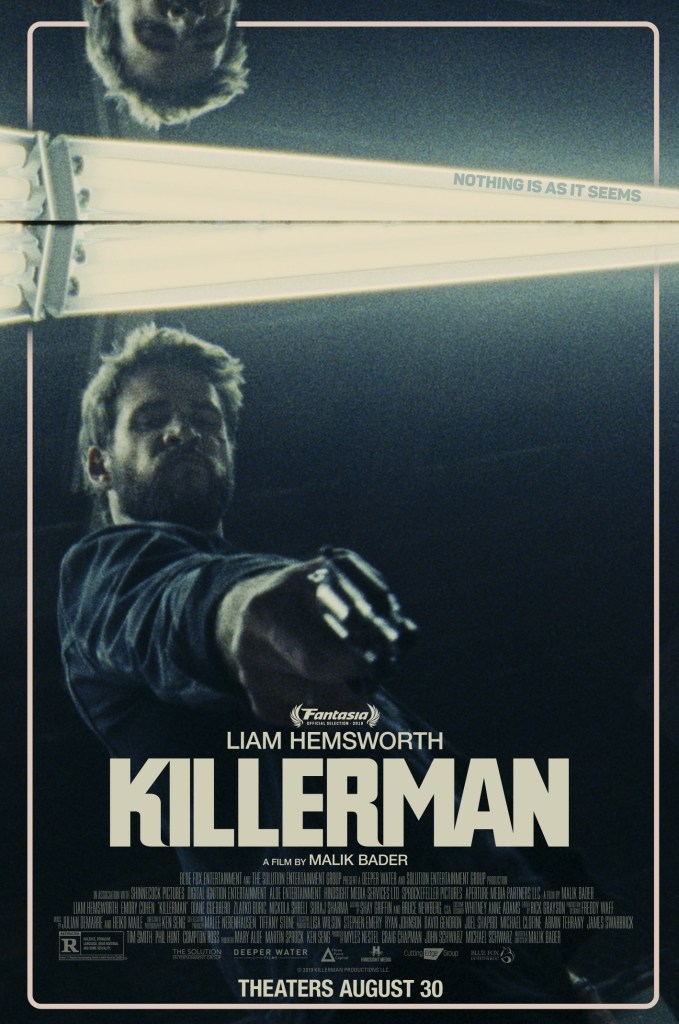
Killerman was directed and written by Malik Bader and stars Liam Hemsworth, Emory Cohen, Nickola Shreli, Malik Bader, Zlatko Buric, Diane Guerrero, Suraj Sharma, and Mike Moh. It follows a criminal who wakes up from a car crash possessing drugs and missing his memory as he tries to survive the consequences and remember the past.
The Plot: Many movies that try to make a pastiche out of films like Ronin and the Bourne franchise end up falling well short of their aspirations. Bader’s story, while not a complete success, manages to breathe some life into old devices and offer a couple clever developments.
Money launderers Moe Diamond (Hemsworth) and Skunk (Cohen) are working their trade, hoping to rise in Perico’s (Buric) ranks. However, Perico is on the verge of going “legitimate”, leaving the young men with one last major score. Before the script descends into the “one last job” cliche, Bader turns it on its head, with Skunk trying to turn a 20-million-dollar-in-ten-days deal into something bigger by putting the drop money into a drug deal, using FedEx (Sharma) as a go-between. Killerman can at times be convoluted without being complex, drawing out points of interest to create a cat’s cradle of relations that doesn’t always serve a purpose. The aforementioned deal isn’t a narrative failure, although it is a failure for Moe and Skunk, who end up on the run from corrupt cops Duffo (Shreli) and Martinez (Bader), as well as a clean cop, Baracuta (Moh), who adds nothing to the plot.
In the process, the two launderers get into a crash, leaving Moe with amnesia. A tired narrative device that gets turned into delayed gratification for Killerman as a third act reveal that doesn’t necessarily add density to the plot but does recontextualize some behavior from primary characters, as certain details don’t fit back into place. After awakening, the two men have to find the drugs used in the deal, and Moe finds his girlfriend Lola (Guerrero) to rebuild his memory. There are a lot of threads in play here, but Bader gives each one of them some weight, as Perico and other parties alter their plans as the situation between Moe, Skunk, and the cops develops.
Denouement for Killerman isn’t flawless, as some facets of the plot were padded while others are underdeveloped, but the comparatively simple revenge finale does at least tie things together as neatly as possible, all things considered.
The Characters: With such emphasis on the complex plot, the characters within it are rarely rounded out by the writing. The entire cast give good performances, especially Hemsworth, Cohen, and Buric, but the details get lost in the mix.
Moe is a man trying to keep things together, even before he loses his memory. He’s effortlessly cool when working his routine route and talking business, hoping to raise himself and Lola out of low-class living, but gets nervous when he has to change his schedule. A sense of loyalty to Skunk convinces him to make bad decisions since he was the one who got him a spot in the underground to begin with. It doesn’t excuse every mistake, but the writing at least endears him to the audience despite his obvious flaws.
Skunk is a more typical second lead for these movies. He’s ambitious, unstable, and fiercely loyal to his friend, even though he’s openly jealous at how quickly Moe has gained Perico’s trust. Reciprocity between the two helps the familiarity be less of a burden, but it’s still a cliche. Perico also happens to be Skunk’s uncle – yet another cliche for Killerman’s cast – but he’s still the same old Balkan mob boss from many other crime movies.
Similarly, the cops are blatantly greedy and indignant towards their supposed job, only in it for the money. The movie shows how they deal with collateral, and just how vicious they can be towards the end, but in substance, they’re the same old antagonists. If not for the performances the only decent character, ironically enough, would be Diamond.
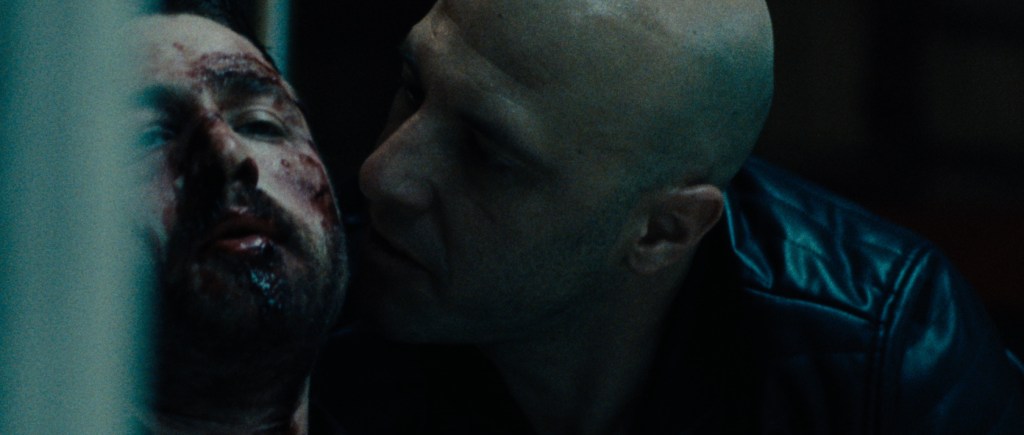
The Crime: Bader collects many familiar tropes from street level films of all decades, as well as creating a sense of urban grime where everyone is dirty, to make his own retro reimagining of distrust amidst a seedy environment. The plot’s complexity doesn’t always help the narrative, but it paints a picture of illegality that many similar films never reach.
Opening with the relatively simple beat that Moe habitually completes is an interesting way to juxtapose what’s to come in Killerman. During a trip to New York’s diamond district, Moe enters with a bag of cash, which soon becomes a big gold ingot, then goes back into cash after buying tons of jewelry, and into a small handful of bank checks to give to Perico. The choice to have all of this happen during the credits and without any dialogue gives insight into just how painless and familiar the process is to Moe; no doubt he’ll be missing it soon.
After the accident, Bader splits the film’s criminal goings on into two major categories: observing Moe and Skunk’s efforts to dig themselves out of the hole they’re in, and the cops tracking their contacts to make any headway they can. Again the script finds a cliche and upends it, as Skunk meets with his crime boss uncle, who is already making plans to cut his losses before his soon to be business partners (local politicians) even pressure him to do so. It’s atypically cold, as normally family ties are held in high regard by the characters who reside in these kinds of movies, but not monotone, as Perico soon reveals why he’s moving so quickly. As for the cop side of things, Killerman offers up a bleak procedural, as Duffo and Martinez clean up any trace of their involvement in the drug deal at the behest of their chief, including FedEx and Moe’s personal life being treated with indiscriminate violence.
Elevating the underworld with a glimpse into realistic, low-key criminality while also turning the proceedings into an ugly, gritty B-movie illustration of scorched Earth politics is no small feat; while the filmmakers don’t always hit their stride, there’s value to both sides of the crime.
The Technics: A crafty narrative and a strong depiction of crime pair well with many of the director’s choices behind the camera, as well as the aggressive but effective mimicry of ‘70s and early ‘80s stylistics. However, there are a few key issues holding Killerman back in the technical department.
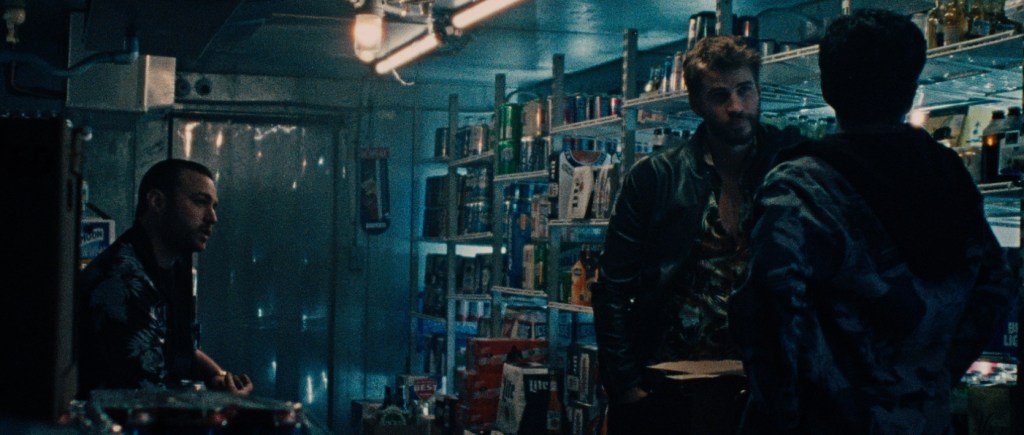
It seems like Bader only wanted to revel in the visual styles and filming techniques of the past, as he and cinematographer Ken Seng do a great job at creating a lived-in, scuzzy New York and New Jersey reminiscent of prior decades, there’s little singularity to the movie’s appearance. The handheld camerawork, 16mm grain, and glossy surfaces add plenty of atmosphere, but this eventually creates a length issue, as establishing shots and static frames drag the pacing down when Moe and Skunk’s search for identity and safety should be more frantic than it can feel at times.
Extraneous material can also make the movie lag, as pointless and/or convoluted characters like Baracuta add extra minutes to the runtime without any payoff. With some very slight rewriting, even Lola could be removed from the picture and next to nothing would change. Other missteps include scenes that are almost entirely composed of pointless yelling, an overreliance on profanity instead of better dialogue, and the amnesia plot point fading into the background at times.
Killerman is a picture that’s rough around the edges and can occasionally fight with itself, but a palpable atmosphere, an investing plot, and some solid performances make it a flawed gem in the indie crime genre.
71/100
Misc details
Release date (US): August 30, 2019
Distributor: Blue Fox Entertainment
Runtime: 112 minutes
MPAA rating: R
 ManVsMovies.com
Leave a comment