

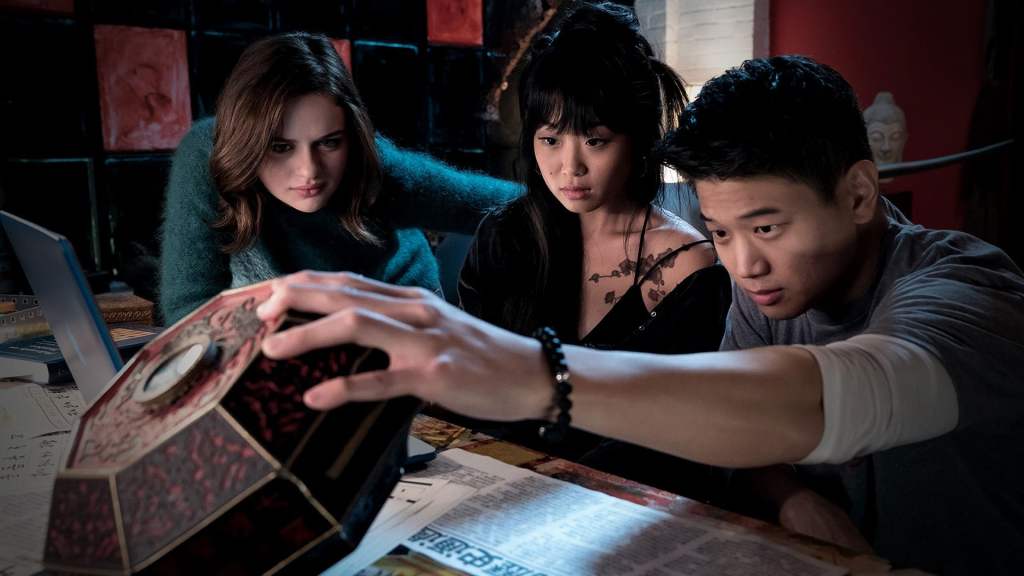

Wish Upon was directed by John R. Leonetti, written by Barbara Marshall, and stars Joey King, Ki Hong Lee, Sydney Park, Shannon Purser, Mitchell Slaggert, Josephine Langford, Ryan Phillippe, and Elisabeth Rohm. It’s about a teenager who finds a box that grants wishes having to grapple with her choices as she finds out that they come at a cost to others.
The Plot: W.W. Jacobs’ short story “The Monkey’s Paw” has been around for over a century and has likely spawned a hundred years’ worth of movies using it as a launch pad. Because of the nonstarter of a plot and the complete lack of structure, Wish Upon is one of the worst in the story department by a huge margin.
As soon as the movie begins, it goes off the narrative rails – opening with Johanna (Rohm) hanging herself and being found by her daughter, only to cut to a decade later as Clare (King, abysmal as usual) deals with horribly artificial high school woes – don’t worry about why – it’s obvious. The throughline is somewhat present, that being Clare’s use of a mysterious Chinese music box miraculously found and given by her father Jonathan (Phillippe) which evidently will provide seven wishes to the user. In a convenient moment, Clare wishes for her bully, Darcie (Langford) to “rot.” Evidently the box doesn’t understand figures of speech, as its delivery of wishes is extremely literal, as Darcie’s skin goes necrotic the next day, while Clare’s dog is killed as consequence.
Marshall doesn’t really have anywhere else to go, as Wish Upon doesn’t really develop its themes, instead sticking to generic scenes with Clare and her friends Ryan (Lee), Meredith (Park), and June (Purser) as they do next to nothing in scenes not intent on providing some flimsy backstory for the box. Even after the kids put the pieces together, Clare just keeps making wishes, causing damage to those around her, including her crush, Paul (Slaggert). I’d like to think that there was an attempt to showcase the dangers of envy, but Leonetti never taps into it, presumably content to bring up plot digressions (one involving “Uncle August” is clearly cut down) until Clare reaches the end of her time with the box.
Despite the awful structure, it’s plenty obvious where the movie will end up, as Clare’s friends repeatedly tell her what will happen with continued use of the box. Normally there’d be points to give for the movie at least being able to establish rules, but it’s near impossible to screw up a story this simple, even for Leonetti.
The Characters: It’s always fascinating to see how in touch writers who are clearly generations removed from the characters they’ve written depict their subjects. Normally, it’s bad, but older characters are often at least palatable, but considering there’s only one middle aged person in this roster – that’s not the case here.
Clare is one of the most selfish and boneheaded characters in recent memory, always turning conversations towards herself. Her personality isn’t defined, as trauma never resurfaces, and inauthentic youthful dialogue fails to connect. The only apparent trait she possesses is cynicism, hating anyone above or below her on the social ladder, including her father because he dumpster dives on occasion. Great protagonist.
Ryan, Meredith, and June are paper-thin teen archetypes that are written with the tact of aliens trying to mimic the broad strokes of human personality. The same goes for Paul, whose jock stereotype is laughable. On the other end is Darcie, who’s just a preppy girl with the kind of demeanor that had been lampooned in Mean Girls a decade prior, sans the ironic depiction.
Atrocious performances can, to an extent, be forgiven in duds like Wish Upon, as it completely lacks meaningful personification for its characters. Lee and Phillippe manage decent performances, however, King and Purser aren’t the kind of actors deserving the benefit of the doubt, making ostensible protagonists impossible to root for. I just feel bad for Jonathan, who’s trying to raise his daughter in a financially decaying household – he’s the real hero.
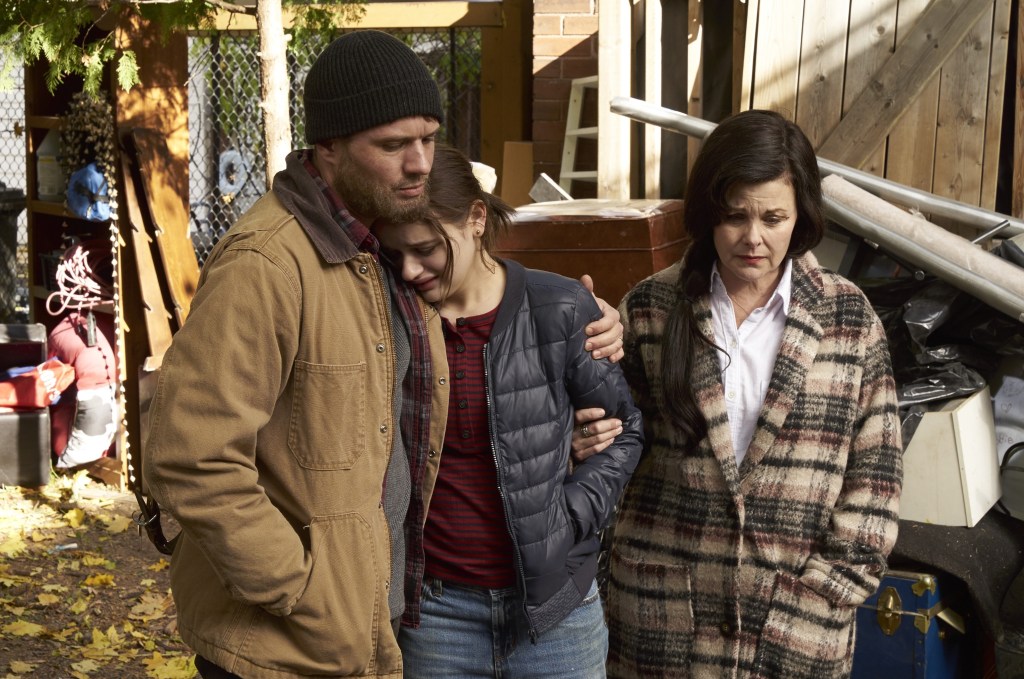
The Horror: Combining the “be careful what you wish for” adage with the deaths of the Final Destination franchise should be a sure thing for a horror movie. Reality disappoints though, as Leonetti never achieves any scares and botches tension repeatedly.
Instead of digging deeper into the psychological horror of the cause and effect of the box, the movie limits itself, sticking with brutal deaths and jumpscares. Those could’ve worked, but Marshall and Leonetti have no imagination for staging, and considering that the box is established to dole out a punishment tied as tightly to diction as possible, it’s never scary when bad things happen. Darcie “rotting,” Paul falling “madly” in love with Clare, and other similar turns of phrase give away Wish Upon’s plans.
Often times, these bad things happen to people who don’t deserve it at the hands of the person who does. Watching innocent people like Clare’s classmate, neighbor (for some reason played by Sherilynn Fenn in a cameo), and dog just feels nasty when Wish Upon continues to frame the culprit as though she’s not directly responsible for all of it. Such nastiness should at least be morbidly entertaining, but the action and deaths are cut down to barely PG-13 standards, obviously from an R rating. Jumpy cinematography, ear shattering sound cues, and blood recolored in post to an oily black ruin whatever kind of twisted terror there could’ve been, even with the dodgy implications.
Last ditch attempts at terror are made by Leonetti, who digs into his usual bag of tricks by trying to make opening a box scary (not the insinuation of what the box may bring – literally opening the box), but none of it works. Wish Upon should’ve left the demons and tried a genie.
The Technics: As a lackluster cinematographer and dismal director, it’s no surprise that Leonetti fumbles an easy genre picture, but it’s still surprising just how bad it gets with the man. A few of the basics are competent, but even some of the bare minimums aren’t met.
Those who don’t grasp what a well-managed tone can do for a movie will come to appreciate it by the end of Wish Upon, as the editing by Peck Prior somehow makes Marshall’s stilted dialogue worse with the final cut of the picture. The movie begins with Clare riding a bicycle alongside her dog, accompanied by generic, upbeat, and poorly mixed music (by tomandandy), switches to the young girl finding her mother hanging from a noose in the attic, and switches back to Clare essentially doing the same thing, just ten years older – music and all. Now imagine that, but for the length of a whole movie, and you have Wish Upon’s tone.
Continuity errors are made even more apparent because of the awful editing, the most egregious of which being Jonathan’s growing and shrinking beard over the course of the runtime. Michael Galbraith’s competent but unremarkable cinematography, the use of a real high school, and believable costuming can’t be destroyed by post-production problems, but those are about the only parts of the movie the filmmakers got right. It’s almost admirable in its near complete ineptitude.
Wish Upon is the kind of catastrophic failure that rarely comes around in mainstream filmmaking – as it only barely ekes out a couple passable attributes. A movie about the continued career of Leonetti is more in order than the (obligatory) teased sequel, that’s for sure.
10/100
Misc details
Release date (US): July 14, 2017
Distributor: Broadgreen Pictures
Runtime: 90 minutes (theatrical) | 91 minutes (director’s cut)
MPAA rating: PG-13
 ManVsMovies.com
Leave a comment